Additional Tax Resources
Tax How-Tos, Handouts, & Resources
Filing your taxes has many benefits, such as reclaiming refunds, staying out of trouble with the IRS, and checking up with the government to help prevent identity theft. The handouts below may be useful to work through various tax situations.
Handouts, InfoSheets, More Information
Filing Taxes
How to File for Free Online

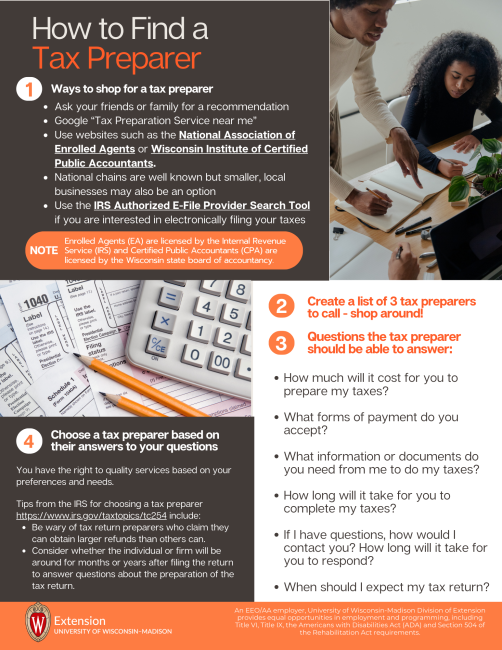
How to Find a Tax Preparer
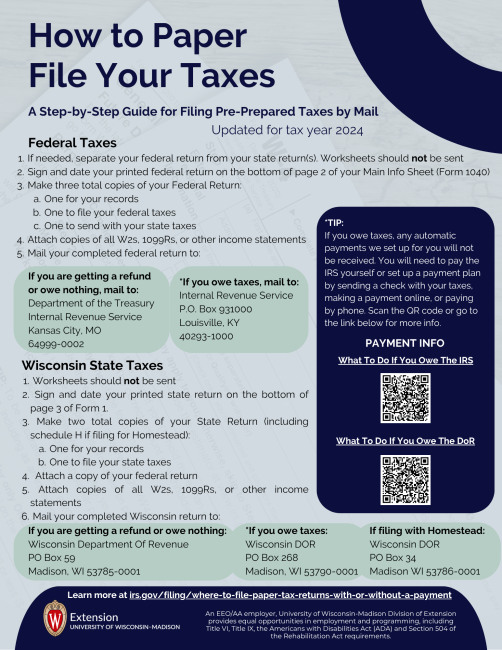
How To Paper File Your Taxes
Paying Taxes
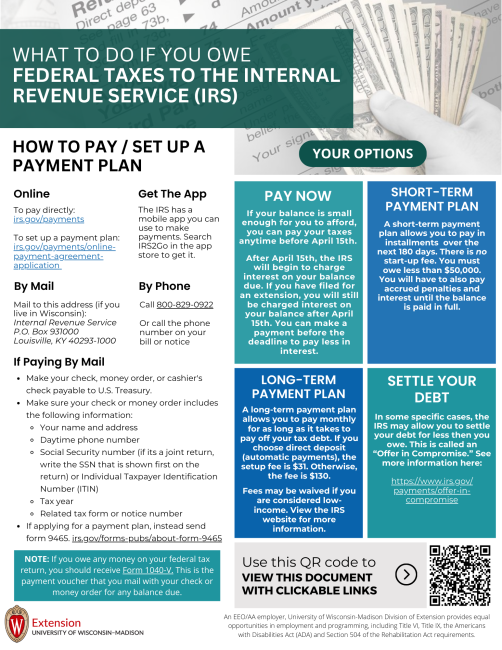
What to Do if You Owe Federal Taxes
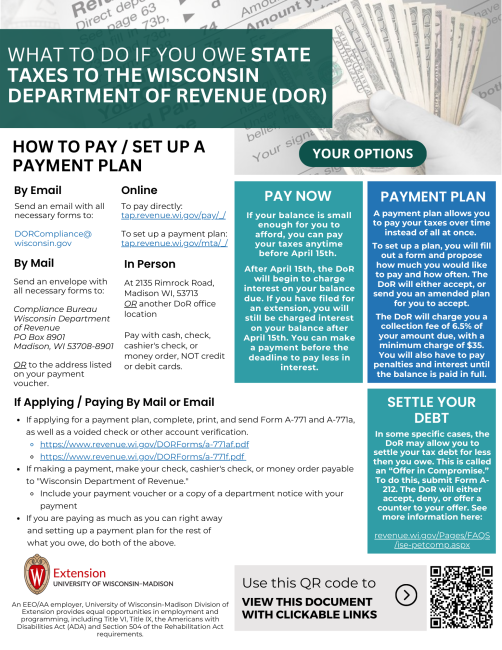
What to Do if You Owe State Taxes
Other Tax Topics
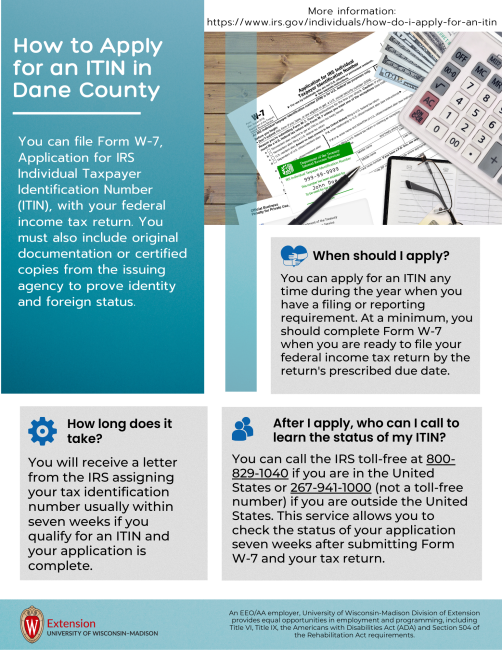
How to Apply for an ITIN in Dane County
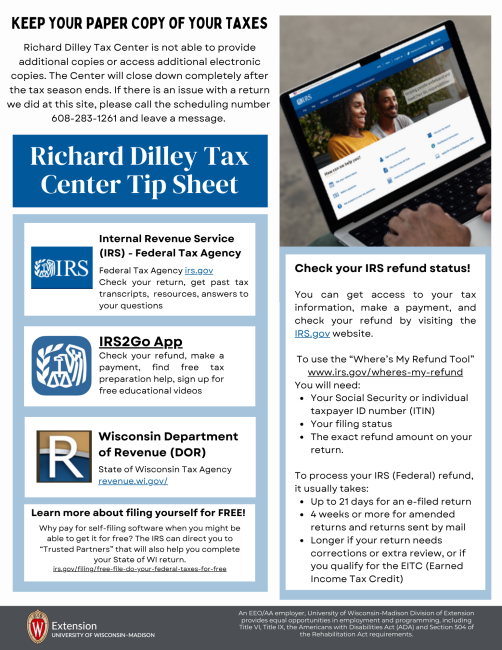
Richard Dilley Tax Center Tip Sheet
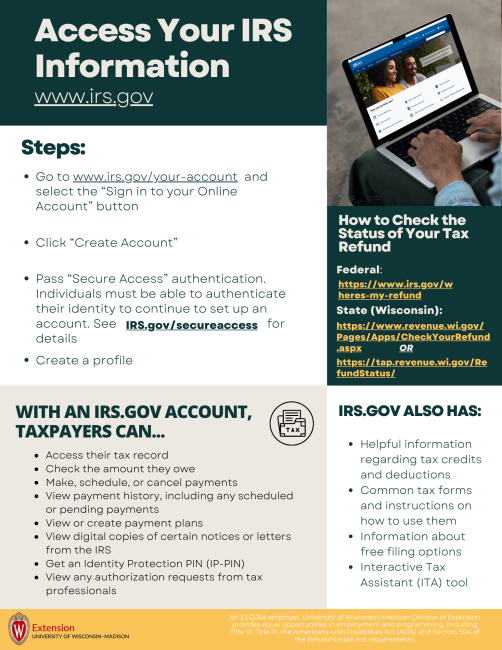
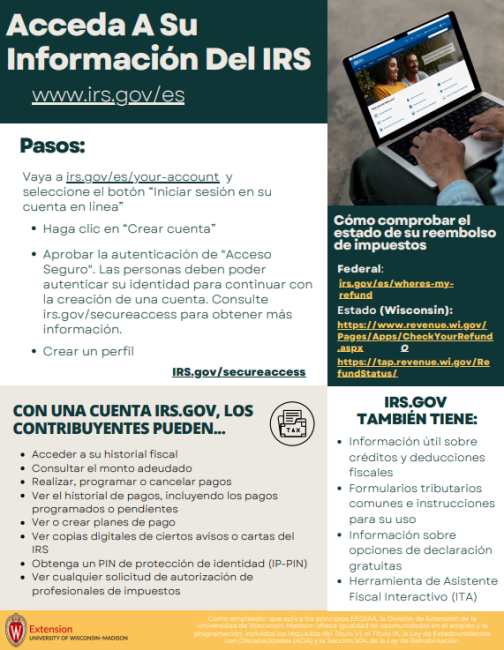
How To Access Your IRS Information
Folletos, Hojas Informativas, Más Información
Cómo presentar impuestos
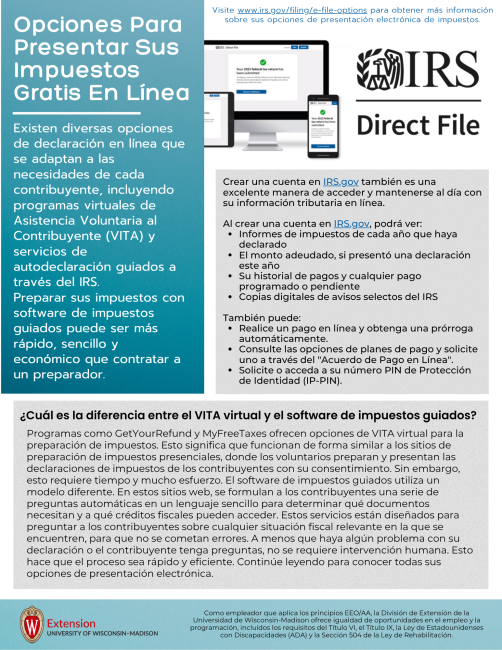
Opciones Para Presentar Sus Impuestos Gratis En Línea
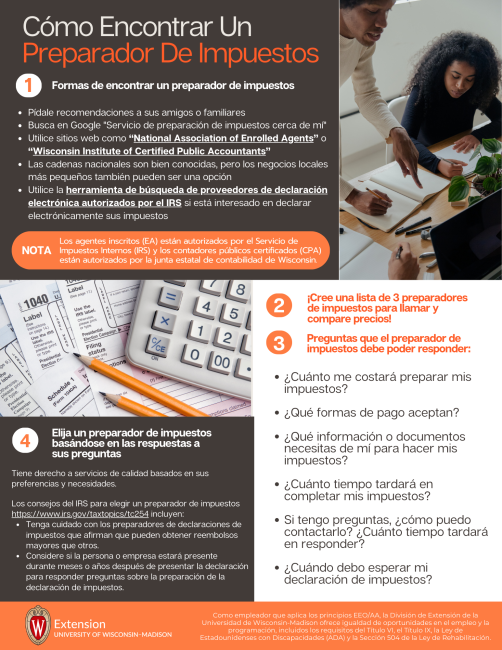
Cómo Encontrar Un Preparador De Impuestos
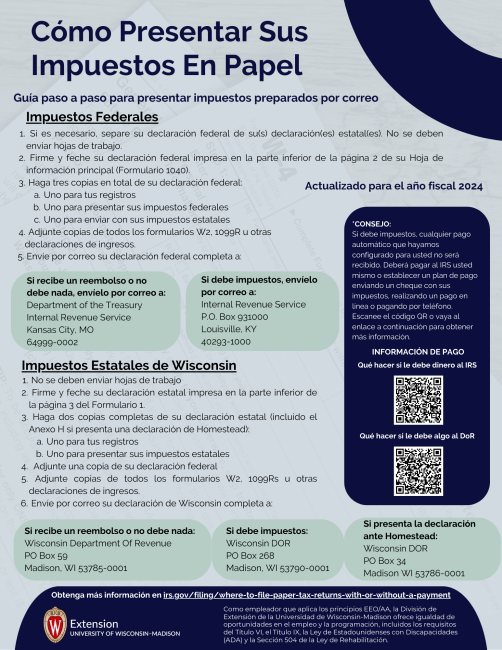
Cómo Presentar Sus Impuestos En Papel
Pago de impuestos
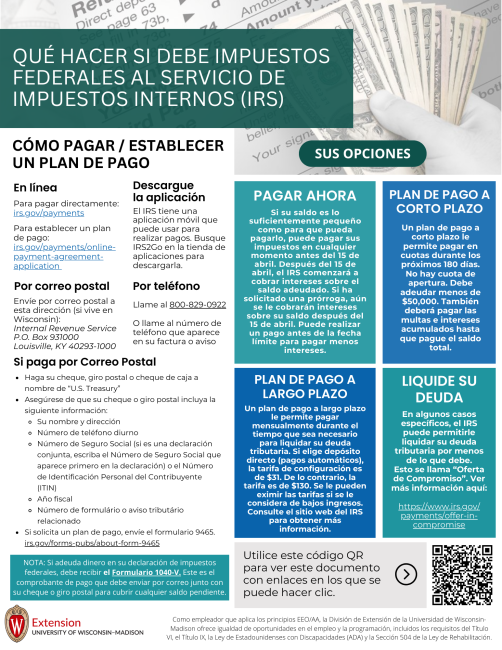
Qué Hacer Si Debe Impuestos Federales Al Servicio De Impuestos Internos (IRS)
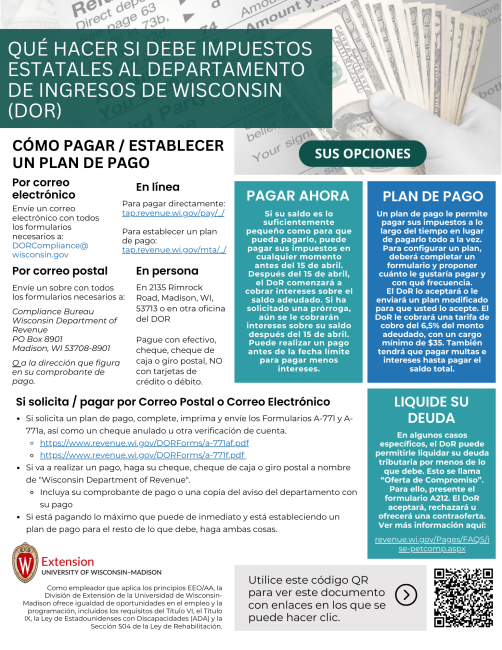
Qué Hacer Si Debe Impuestos Estatales Al Departamento De Ingresos De Wisconsin (DOR)
Otros temas dobre impuestos
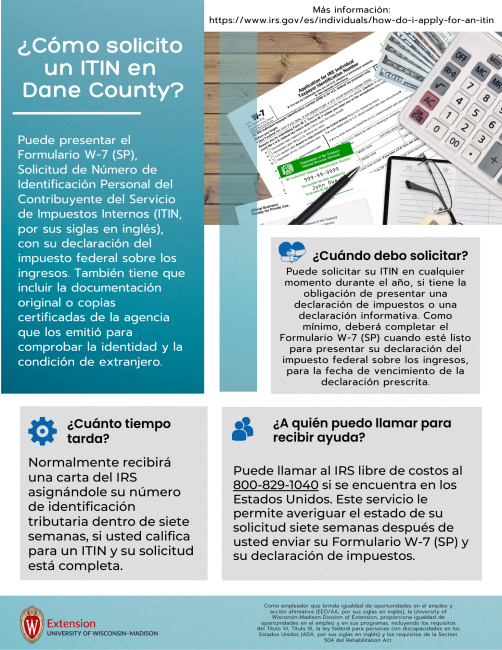
¿Cómo solicito un ITIN en Dane County?
How To Access Your IRS Information
Free Tax Assistance Outside of Dane County
*Please note that the links to tax preparation information are to external websites that may not yet be updated; read those sites carefully to be sure the information is current.*
Free tax assistance can be found across the state in some community centers, libraries, churches, shopping malls, and retirement homes. Most VITA sites are open from February 1 through April 15. To find the VITA or TCE site closest to you, please call:
- 1-800-829-1040 for VITA site locations,
- 1-888-227-7669 for TCE site locations, or
- call “211” for local free tax sites.
You can find a listing of free tax assistance sites on the Department of Revenue website.
This IRS link helps you find free tax sites based on the ZIP code you submit. This is not a comprehensive list, but includes some of the free tax sites available in the state.
Tax Resources
Local Offices to Answer Your Tax Questions
Find Your Local IRS Office in Wisconsin
Find Your Local Social Security Office
Help with Federal Tax Returns
Help with State Tax Returns
Wisconsin Department of Revenue
Social Security Administration
Have you been contacted by the IRS?
Tax Credits
Tax credits reduce the amount of income tax you owe to the federal and state governments. Credits are generally designed to encourage or reward certain types of behavior that are considered beneficial to the economy, the environment, or to further any other purpose the government deems important. In most cases, credits cover expenses you pay during the year and have requirements you must satisfy before you can claim them.
Three tax credits that are specifically geared toward working adults who are earning low to moderate salaries are the Earned Income Tax Credit, Wisconsin Homestead Credit, and the Child Tax Credit. Please learn more about these credits to see if you are eligible for the money you deserve!
Earned Income Tax Credit
EITC, Earned Income Tax Credit, is a benefit for working people who have low to moderate income. A tax credit means more money in your pocket. It reduces the amount of tax you owe and may also give you a refund. Earned Income Credit means extra cash for working families! You may qualify for credits from the U.S. Government and the State of Wisconsin that could bring you more than $8,000!
Wisconsin Homestead Credit
The Homestead Credit is a tax benefit for renters and homeowners with low or moderate incomes. It is designed to lessen the impact of rent and property taxes. Qualifying persons can get back some or all of their state taxes withheld during the year. Those who do not have earnings, or whose earnings were too small to have taxes withheld, can get extra cash back from the State.
Child Tax Credit
The Child Tax Credit helps working families offset the cost of raising children. It is worth up to $1,000 per eligible child (under age 17 at the end of the tax year). If the Child Tax Credit exceeds taxes owed, families may receive some or all of the credit as a refund, known as the additional child tax credit (ACTC) or refundable CTC.