

Community Engagement Process
One of the core elements of this project was its comprehensive and inclusive community engagement process, which was used to serve dual purposes: (1) gather input about the Dane County food system from the people who live and work within it, and (2) forge new connections, relationships, networks, and collaborations that can be used to advance food systems work in the future.
The USDA Regional Food Systems Partnership (RFSP) grant established the following objectives, which initially established the scope of the project’s community engagement process:
- Collecting and analyzing information from past planning processes, existing plans, and concurrent studies assessing the functionality of the South Central Wisconsin regional supply chain.
- Building a trust-based network of diverse collaborators, with whom to co-create and implement a community-driven, regional engagement process that incorporates the voices of producers and consumers who have had limited opportunities or faced barriers to participate in past planning processes.
- Building upon the recommendations of the Pandemic Food System Study to complete an inclusive community engagement process and thorough assessment of the South Central Wisconsin regional food system.
This led to the development of a multi-faceted approach. The goal was to use a variety of engagement opportunities and formats to generate authentic opportunities for input that would appeal to more people. This included:
- Public presentations
- Focus groups
- Community-led sessions
- Community Navigator outreach
- Consumer and producer surveys
These activities were used to solicit input on the current state of the food system, desired changes for the future, and to achieve the second RFSP objective. Individuals who were connected through the engagement activities were offered the opportunity to stay informed on the project and have received updates about its progress. These networks will be further engaged to support implementation.
Public Presentations
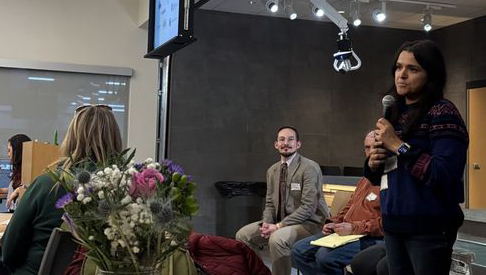
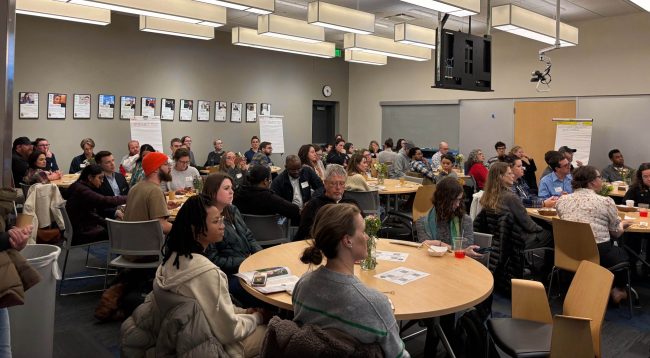
Between February and September 2025, the team carried out 14 in-person community presentations that reached over 630 individuals. These events were advertised through social media and host venue contact lists. This included town hall events that were open to the general public and other events that were held in conjunction with specific collaborators and their existing audiences, such as faith-based institutions and events organized around racial justice topics.
The format of each event varied based on venue and audience, but typically involved an informational presentation about the Food System Action Plan from one or more members of the Project Team, followed by a facilitated discussion with members of the audience. Feedback was recorded via note-taking and flip-charts and responses were later coded for identification of themes.
Analysis of these events indicated that access, equity, and affordability were primary issues, followed closely by health and sustainability. Many people want food options that are more affordable and close by that can meet a variety of dietary preferences. Thematically, respondents’ relationship to food prioritized family, community, and local sourcing.
Focus Groups
To gather input from key stakeholder groups and community members whose perspectives are not always included in planning and decision-making, the Project Team coordinated specific community engagement focus group sessions. Through surveys and other engagement activities, individuals were offered additional opportunities to identify if they would be interested in supporting additional engagement activities. REAP Food Group and Second Harvest Foodbank of Southern Wisconsin (subsequently called Second Harvest) were able to host focus groups for farmers and individuals experiencing food insecurity, including some sessions held in Spanish.
Community-Led Sessions
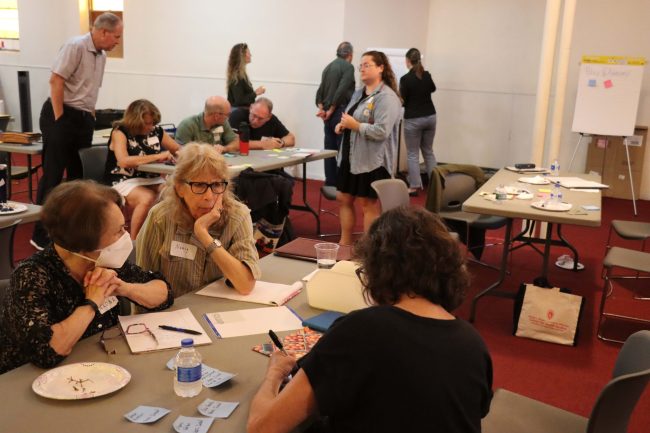
To achieve the community-building objectives of the RFSP grant while expanding engagement opportunities beyond existing relationships and networks, an innovative and decentralized approach was developed to equip community collaborators with the tools to host their own engagement sessions for groups of their own choosing. This increased authentic conversation while also developing leadership skills.
To support this, the Project Team developed a digital engagement toolkit that collected resources needed to host a session and facilitate a discussion about the Dane County food system. This included facilitation guides, printable flyers, and instructions for gathering and submitting session feedback. Individuals and organizations could apply for up to $1500 to cover the cost of supplies needed to host an event, including food, gift cards, childcare, transportation, or print materials.
More than 25 community groups facilitated a session, allowing for greater input from groups that have had limited opportunities or faced barriers to participate in past food system planning, including racial and ethnic minority populations, immigrants, people with language barriers, low-income residents, LGBTQ+ individuals, and people with disabilities.
Community Navigator Outreach
In order to further expand outreach, the Project Team invited a group of Community Navigators who were able to attend community events to share information about the Food System Action Plan project and solicit real-time feedback from members of the public. A Community Navigator Coordinator guided and supported the team of Community Navigators to attend dozens of events including community meals, environmental and sustainability summits, public park gatherings, and festivals across 10 different Dane County municipalities.
This strategy served multiple goals:
- Sharing about community food systems and the Food System Action Plan
- Gathering input about the local food system via in-person suggestions and online surveys
- Directing individuals toward other engagement events and opportunities
- Enhancing relationships across different parts of the community
- Building skills and expertise on food systems topics among the Navigators
Key feedback from the Navigators included one individual saying it forged “deep community engagement—building connections between people, neighborhoods, and the vital resources they need to thrive.” Another navigator shared that their “lived experience and leadership are essential to shaping a food system that reflects the real needs and strengths of the people it serves. Together, we’re creating space for collaboration, conversation, and collective action to ensure everyone in Dane County has access to healthy, culturally meaningful food.”
Surveys
Two online surveys were developed to collect direct feedback on subjects related to food systems in Dane County. Surveys were made available online and shared via QR codes at in-person community engagement events, virtual meetings, and other settings. Surveys were open from February through late August 2025.
Consumer Survey
Soliciting input from the people who live, eat, and work in Dane County. This included 50+ questions:
- Respondent demographics
- Food preferences and eating habits
- Retail preferences
- Open-ended questions regarding local food system experiences and involvement in Food System Action Plan implementation
With 650+ responses, the consumer survey data offered insight into consumer experience in the Dane County food system. Survey respondents included Dane County residents outside the city of Madison (as well as within), and representation across multiple ethnicities and races, various living situations, employment categories, and income levels.
Agricultural Producer Survey
Soliciting input from farmers and producers in Dane County and surrounding counties. This included 40+ questions about demographics, food production goals, retail operations, and challenges or needs.
The responses to the producer survey provided valuable insight into the gaps and opportunities for enhancing and expanding local food production and agricultural operations.
As survey responses were collected, the Project Team monitored demographics in real time to help inform targeted outreach for other forms of engagement and Community Navigator support.
Data Analysis
Survey analysis was conducted by the Project Team, with additional support from Second Harvest and UW–Madison Extension. Additional qualitative data analysis was used to collect themes from in-person events and open-ended survey questions.
In addition, Second Harvest compared the aggregate survey results and to the responses of individuals who indicated they were experiencing food insecurity. This allowed for explicit focus on the unique experiences, needs, and interests of people experiencing food insecurity, which otherwise may have been obscured in the full population. Elevating these voices was a key goal and aligned with the Project Team’s identified values for the Food System Action Plan.
UW–Madison Extension contributed additional development of survey result cross-tabs, which were used by the Project Team to inform goal and strategy development, as well as to understand consumer preferences.